

A digital platform to understand children’s language-learning profiles.
DECILE (Dispositivo de Evaluación de la Comunicación Infantil en Lengua Española) is an online assessment platform designed to evaluate oral language comprehension and production in Spanish-speaking children aged 3 to 12. Built in Argentina from psycholinguistic research, DECILE helps researchers, educators, and clinicians identify how children understand language — and how their learning profiles differ.

Designed for children.
Grounded in research.
Built for Spanish-speaking contexts.
Our Vision
DECILE envisions a world where every child—regardless of linguistic background or ability—receives the support they need to develop strong communication skills. By leveraging cutting-edge psycholinguistic research and innovative digital tools, DECILE aims to ensure that no child is left behind due to language-related barriers.
Our Mission
To identify diverse language learning profiles early, reduce biases in assessment, and equip educators, health practitioners and caregivers with actionable insights. By bridging the gap between science and practice, DECILE strives to foster equitable learning opportunities, empowering all children to connect, express themselves, and reach their full potential.
What DECILE does
DECILE evaluates oral language skills through child-friendly digital tasks. Children interact with playful activities guided by DECILE’s character, Popi, while the platform captures research-grade data.

DECILE currently assesses
Sentence comprehension
Question comprehension
Narrative production
Our users
Children

Especially Spanish-speaking children, deaf and hard-of-hearing children, and children at risk of language or learning difficulties.
Teachers

DECILE is designed to help teachers better understand the language-learning needs of children in their classrooms.
SLT and audiologists

DECILE provides structured information about oral language comprehension and production that can complement professional assessment.
Schools and Education systems

DECILE aims to support earlier identification of children at risk and more efficient targeting of interventions.
Researchers

DECILE produces research-grade data through ordinary internet-connected devices.
How DECILE works
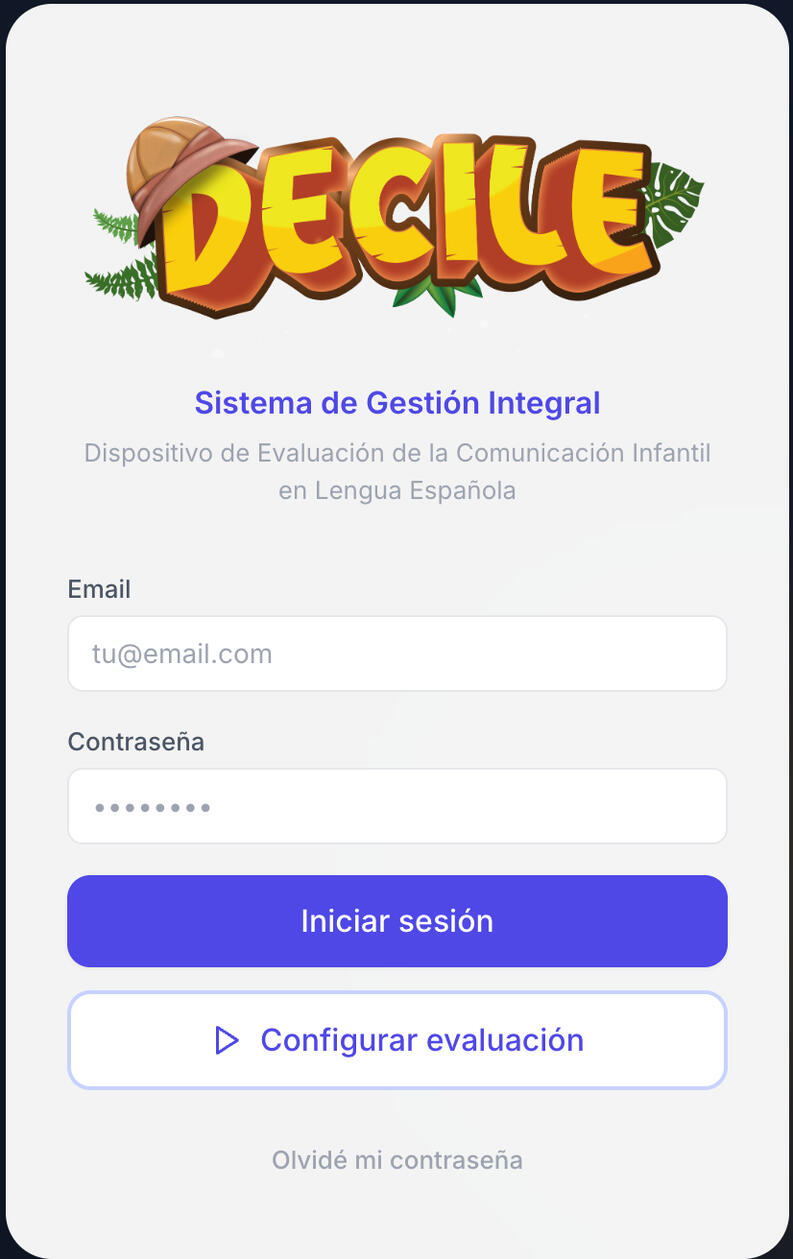
1. Get Access
School representatives, teachers, or specialists receive access to the DECILE platform.
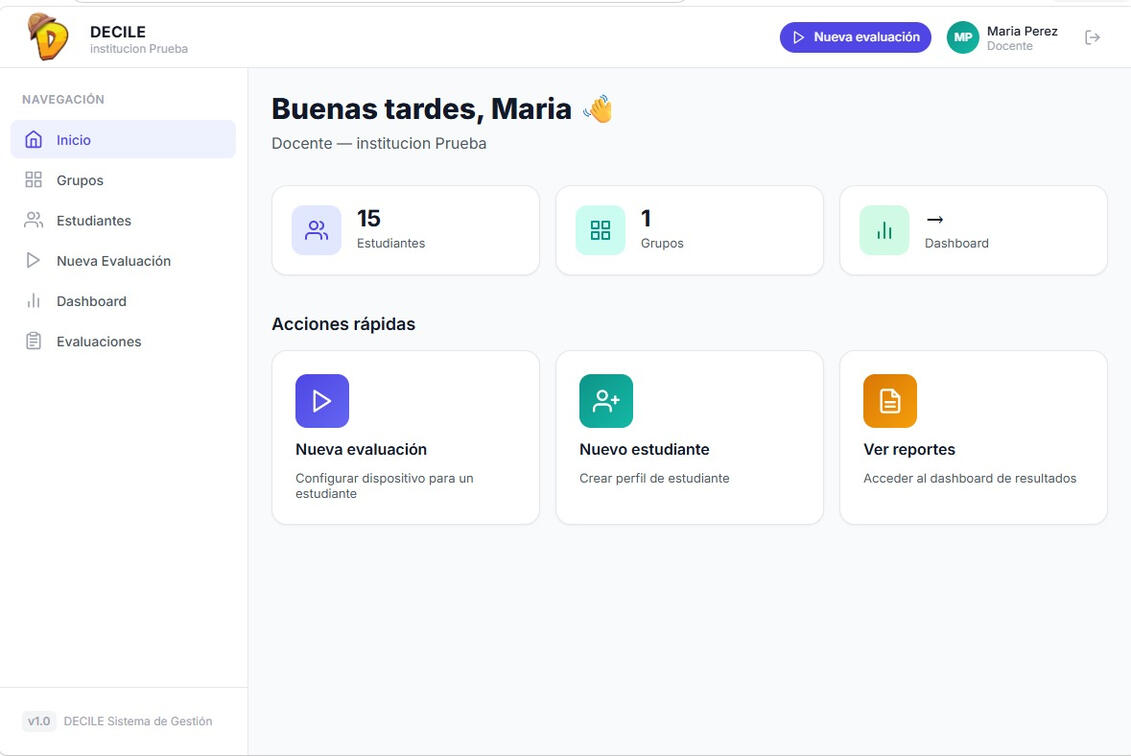
2. Create student profiles
Users create profiles for the children they will assess, including basic information needed to organize sessions and interpret results.
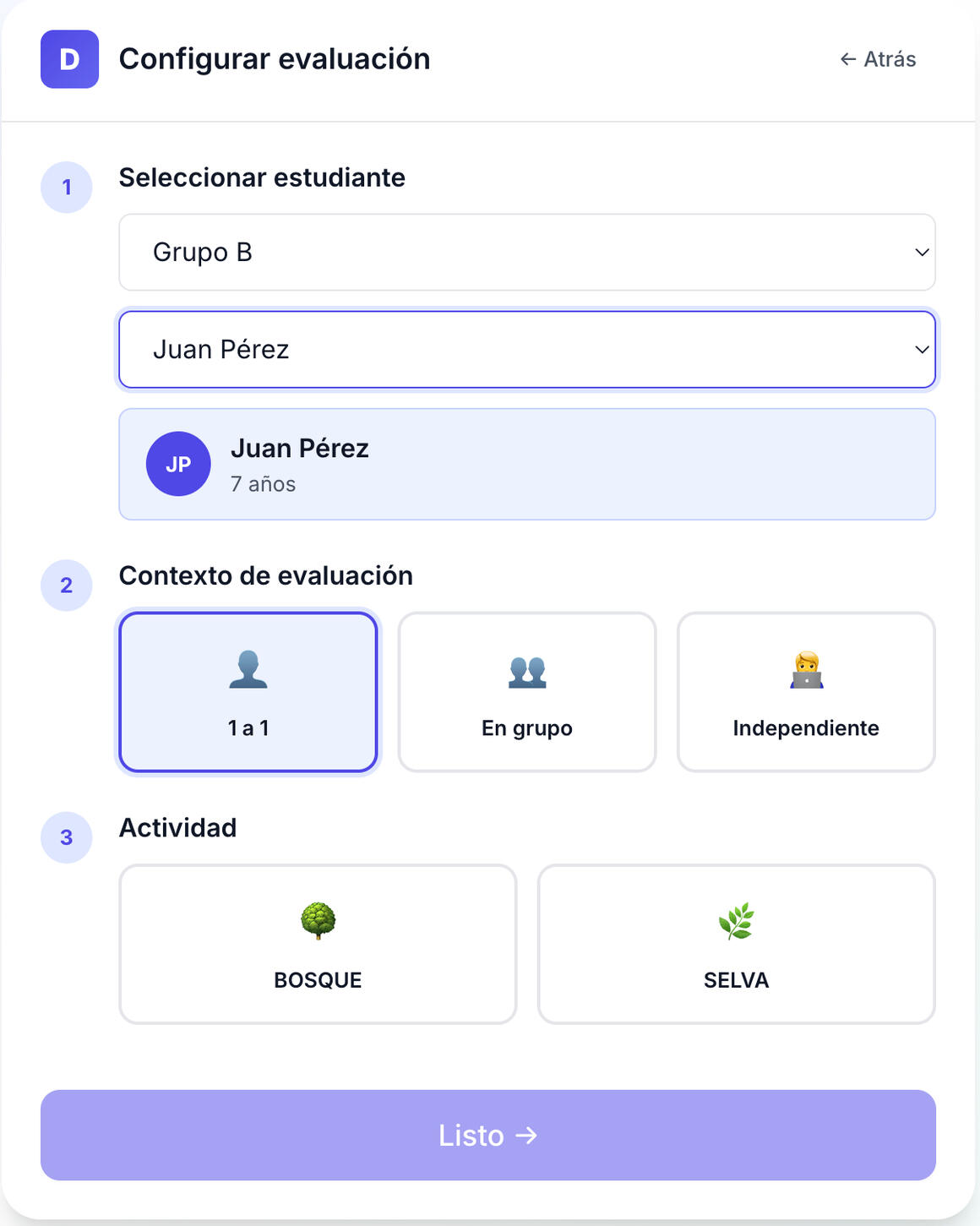
3. Choose what and how to assess
Users select the language skill they want to evaluate and choose the administration mode: one-to-one, small group, or independent use.
Independent mode is currently under development.
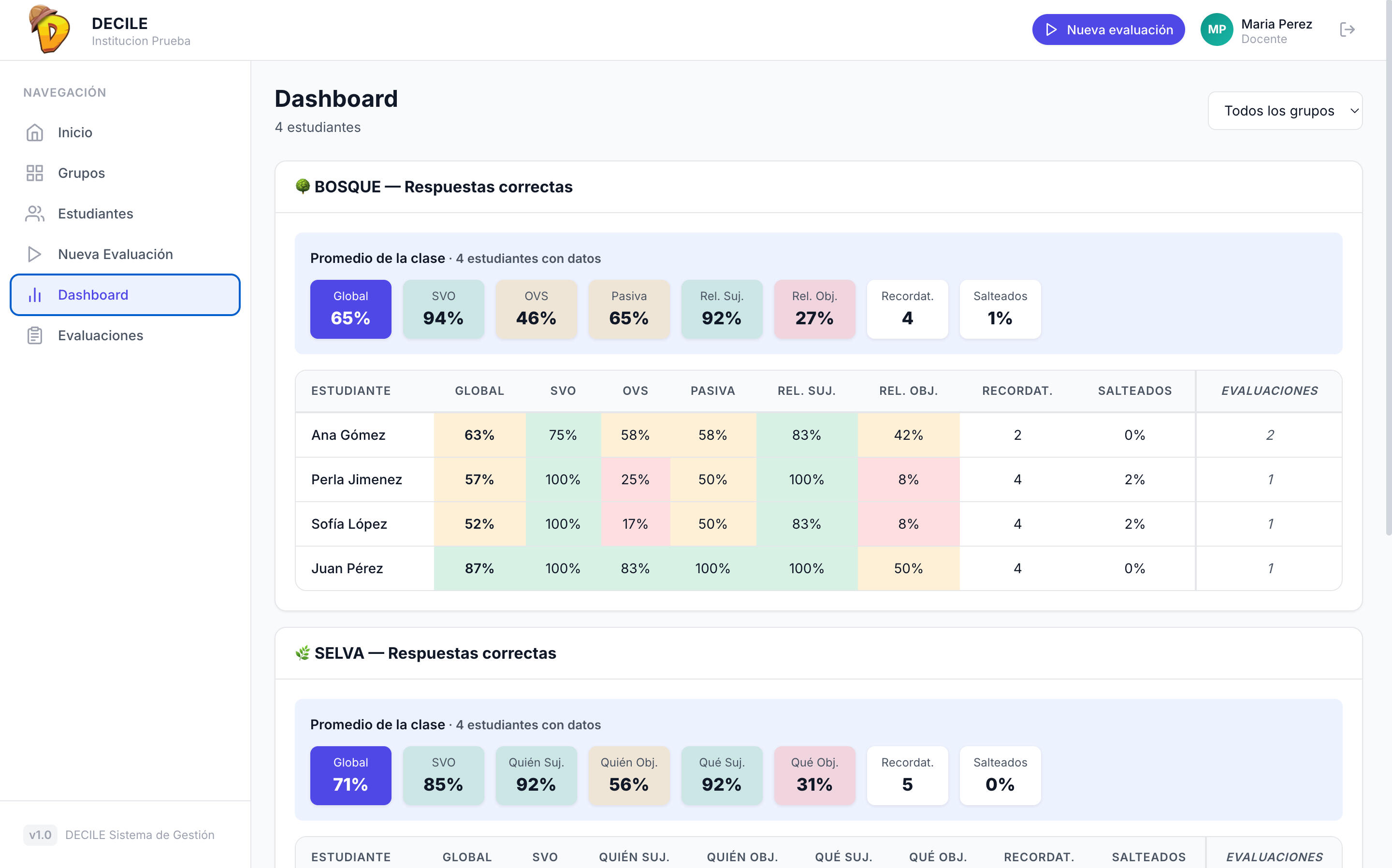
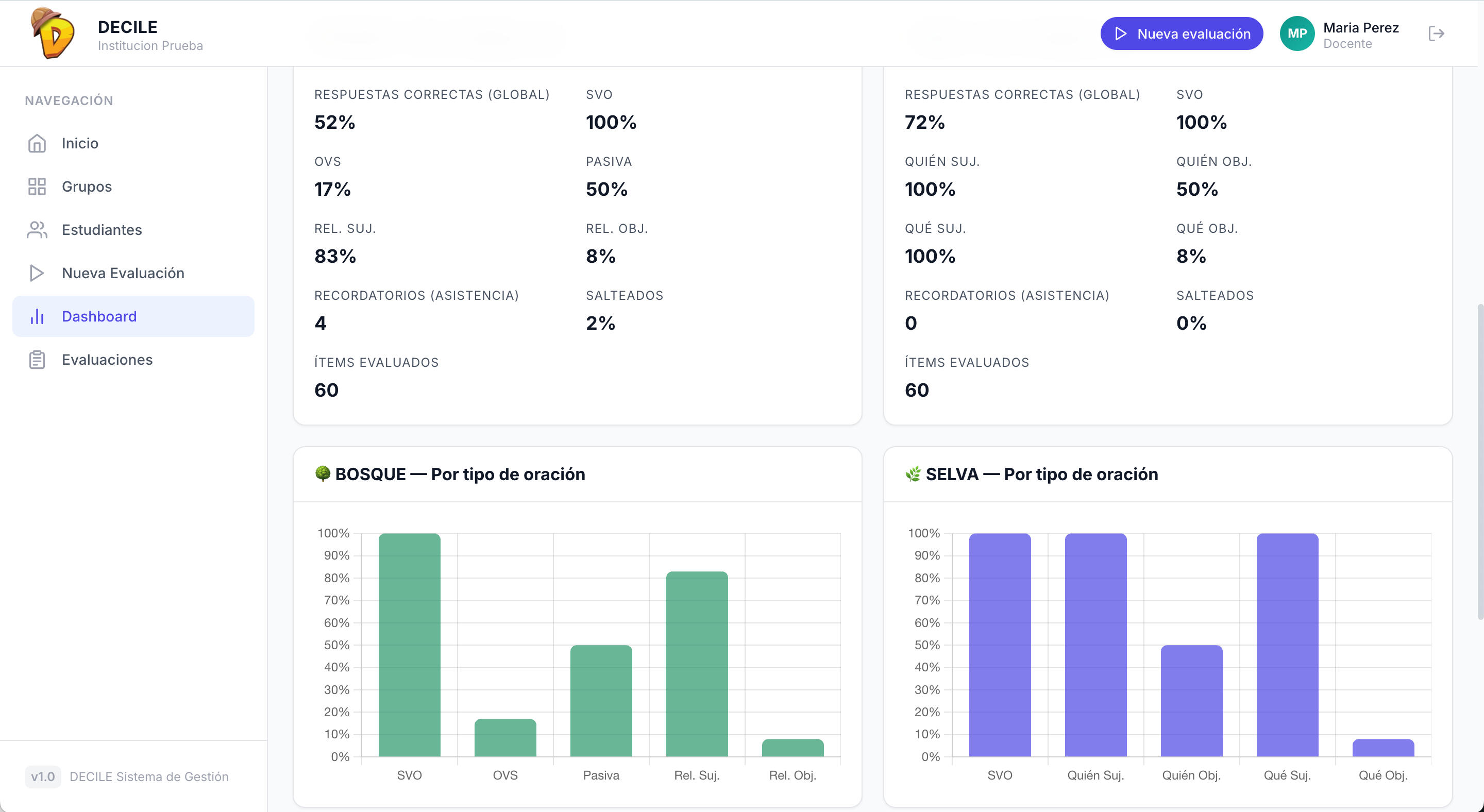
4. View results in the dashboard
After the assessment, results are available in the dashboard, helping users visualize each child’s performance and identify areas that may need support.
What makes DECILE different
Built in Spanish from the start
Grounded in research
Focused on oral language
Designed for heterogenous and neurodiverse profiles
Child-friendly and school feasible
Built for adaptation
Our Team
Carolina
Gattei
Founder and
scientific lead
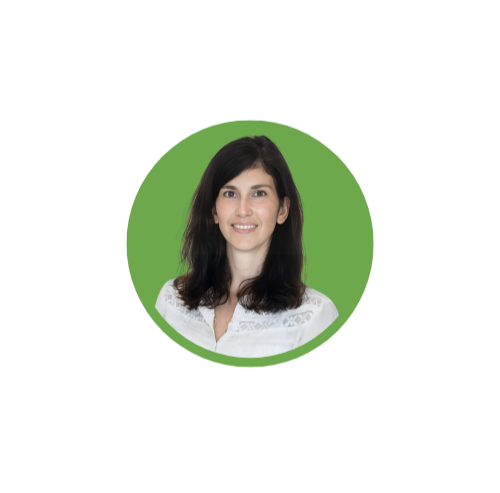
Carolina is a psycholinguist and language acquisition researcher. She created DECILE to advance research on language development in Spanish-speaking children and to build scalable tools for schools, clinicians, and researchers.
Cecilia
Calero
Strategic Research and Scaling Advisor
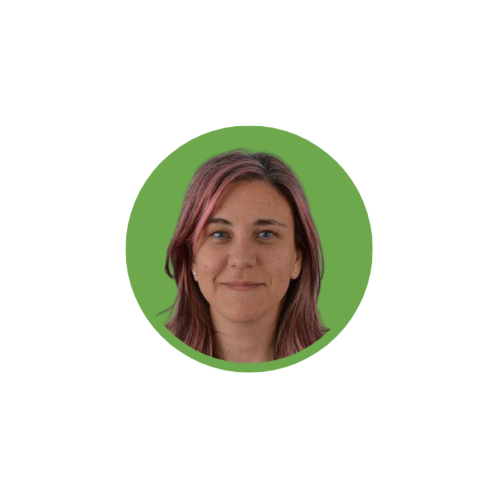
Cecilia brings expertise in cognitive development, teaching, metacognition, self-regulated learning, and large-scale school-based implementation.
Agustín
Gravano
LANGUAGE Technology Lead

Agustín contributes expertise in automatic speech recognition, spoken language technologies, and computational analysis of narrative production.
Analí
Taboh
Sentence Comprehension module Lead

Analí leads the development and implementation of DECILE’s sentence comprehension tasks, with expertise in psycholinguistics and language acquisition in deaf and hard-of-hearing children.
Matilde Calmejane
SENTENCE PRODUCTION MODULE LEAD
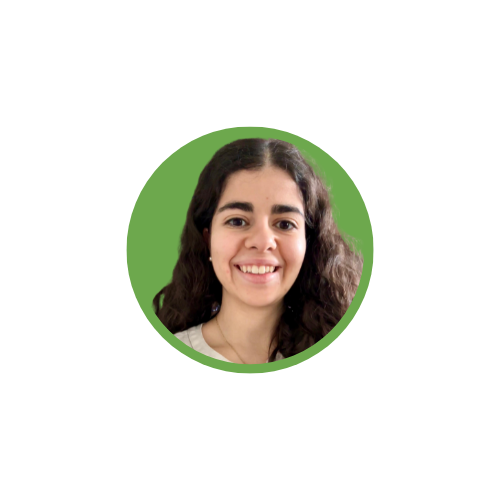
Matilde contributes to the development of DECILE’s Sentence Production module, which focuses on how children express and organize spoken language.
Recognized and supported by
DECILE has received recognition and support through research, innovation, and education programmes that advance inclusive learning and scalable educational technology.These recognitions reflect DECILE’s potential to combine rigorous research, inclusive design, and scalable educational technology.
Partner with DECILE
We are building partnerships with schools, clinicians, researchers, and education systems to validate, adapt, and scale DECILE.Whether you are interested in school-based implementation, research collaboration, language adaptation, or strategic support, we would be happy to hear from you.


Research & Evidence
Built from psycholinguistic research. Refined through school-based validation.
DECILE is grounded in ongoing psycholinguistic research with children. We conduct studies to understand how children process language and use that evidence to adapt research-based tasks into accessible, web-based, game-like assessments. The platform is continuously refined according to scientific evidence and school-based implementation. We are currently running validation studies in Argentina and adapting narrative production tasks for use in Colombia and Ghana, expanding DECILE’s capacity to support language assessment across different linguistic and educational contexts.
Want to learn more about the research behind DECILE? Explore the studies that inform our platform.
Explore the Research
Taboh, Analí R. (2025) La comprensión de oraciones con distinta complejidad en niños y niñas con hipoacusia oralizados hablantes de español Tesis de doctorado en Lingüística, Facultad de Filosofía y Letras, Universidad de Buenos Aires. Link to thesis
Calmejane, Matilde (2025). Hipoacusia y lenguaje infantil: La producción de estructuras sintácticas complejas en español. Tesis de Licenciatura, Facultad de Filosofía y Letras, Pontificia Universidad Católica Argentina. Link to thesis
Taboh, A. R., Shalom, D. E., Alvares, B., & Gattei, C. A. (2024) Sentence Comprehension in Spanish-Speaking Children With Hearing Loss: On the Integration of Morphosyntactic and Lexico-Semantic Cues. Journal of Speech, Language, and Hearing Research, 1-16. Link to paper
Taboh, A. R., Gattei, C. A., & Shalom, D. E. (2024) Dificultades morfosintácticas en niños con hipoacusia oralizados: propuestas explicativas y su relación con otras habilidades cognitivas. Quintú Quimün: revista de lingüística, (8), 104. Link to paper
Seno, V., París, L., Gattei, C. (2024) Adquisición de formas temporales no homogéneas en niños de cinco años de distintos contextos socioeducativos. Interdisciplinaria, revista de Psicología y Ciencias Afines. V.41, N°2. Link to paper
Taboh, A. and Gattei, C. A. (2023) Enlace sintaxis-semántica: comprensión de oraciones con verbos psicológicos en niños con hipoacusia. Revista de la Sociedad Argentina de Estudios Ligüísticos, 267–284. Link to book chapter
Taboh, A., Gattei, C. A., and Shalom, D. E. (2022) Evaluación del lenguaje oral en niños y niñas con hipoacusia: los tests estandarizados y la edad auditiva. Revista Signos.Estudios De Lingüística, 55.110. Link to paper